
A living replica
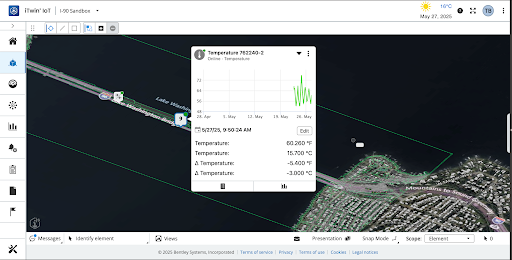
A digital twin is a virtual replica of a physical thing that uses real data. The concept isn’t new: NASA kept a duplicate of the Mars rover on Earth to test commands before sending them to the one they could never get back.
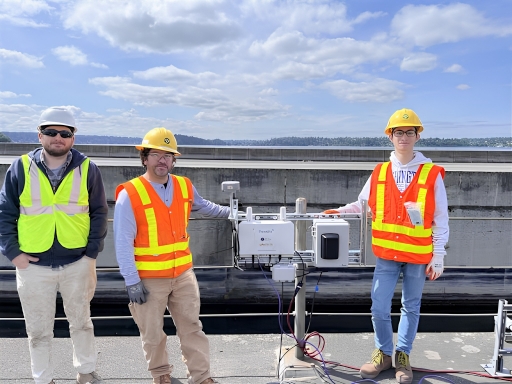
But no one has used the approach to manage the maintenance and operations of a floating bridge before. The I-90 digital twin connects sensors placed inside the floating pontoons to a computer model that pulls in weather data, GPS positions of the pontoons, anchor cable tension readings and other measurements. The information travels to the cloud, where maintenance staff can review a 3D model of the bridge, click on a sensor location and see real-time conditions at that spot.
The project is led by CEE Assistant Professor Travis Thonstad and Professor Michael Motley, in collaboration with UW Mobility Innovation Center Director Bart Treece and Construction Management Professor Carrie Sturts Dossick.
Among the first to put the technology to use is Vince Horn, a Washington State Department of Transportation bridge keeper who knows every nook and cranny of the I-90 floating bridges. Horn has built what amounts to a virtual inspector, with custom alerts that notify him when wind speeds spike or conditions shift. During a storm, for example, crews previously had to go out on the water to check wave height. But now, the sensors can detect anchor cable strain and pontoon movement in near real time, potentially keeping them out of hazardous conditions.
Rail on water
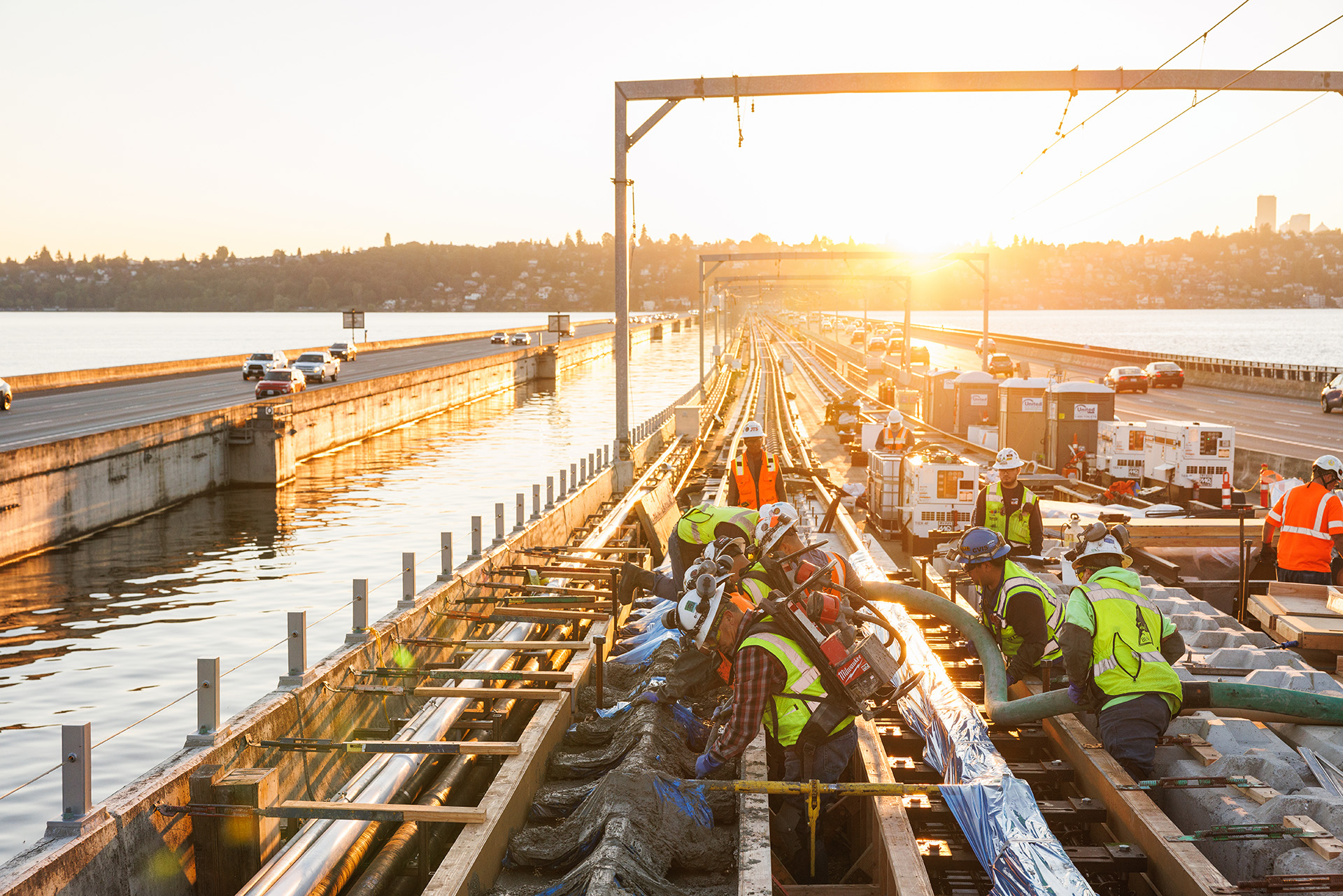
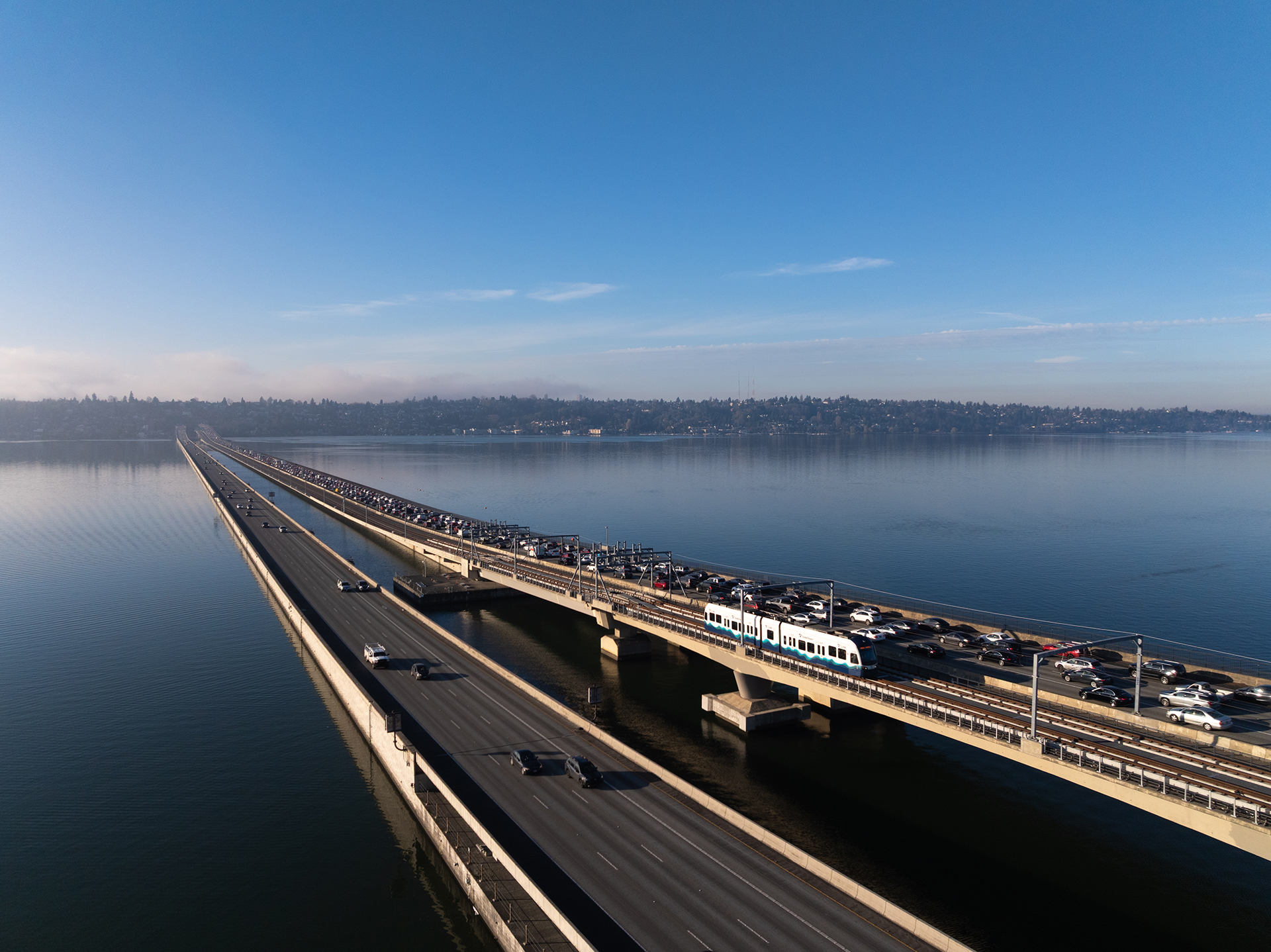
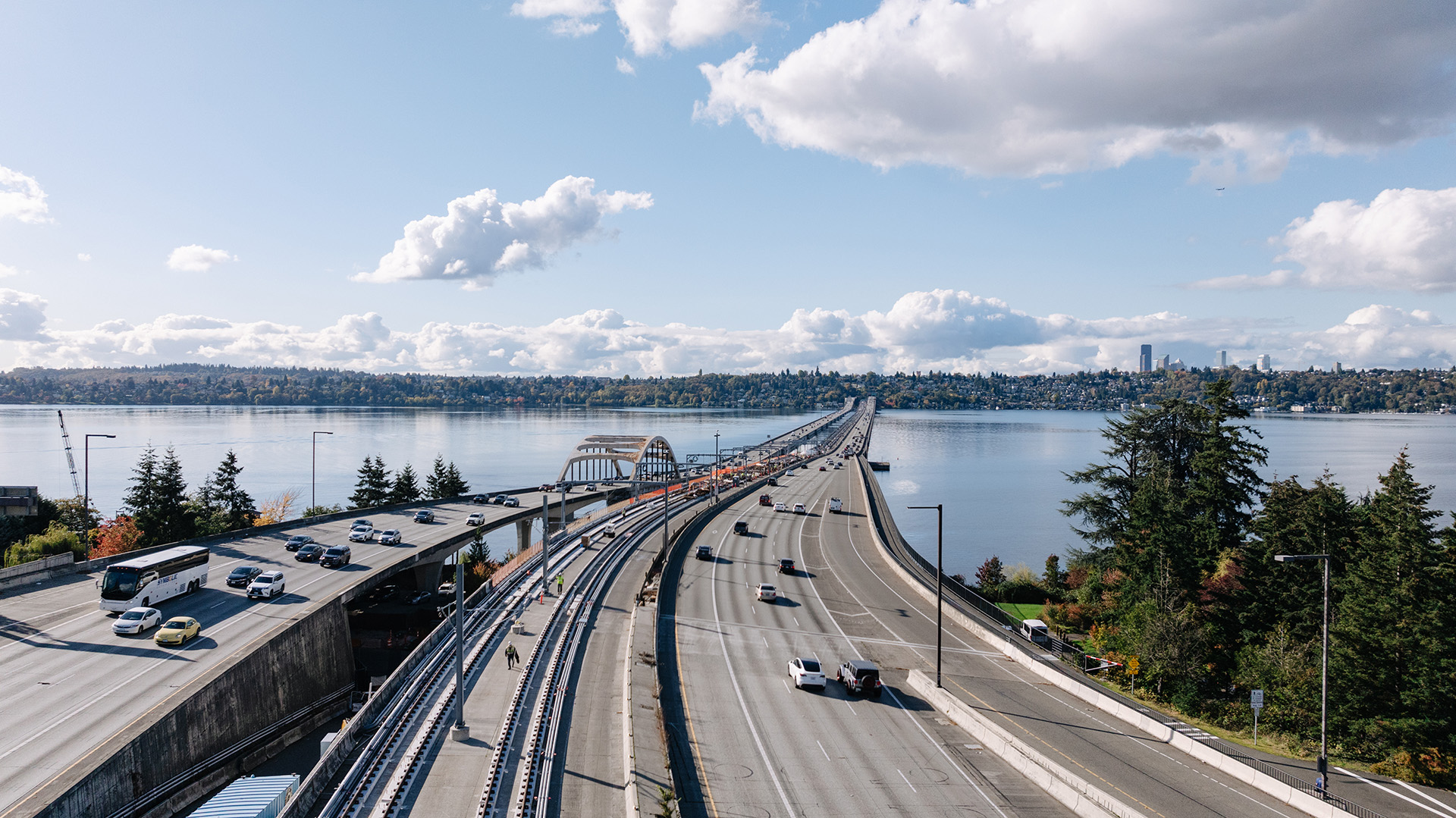
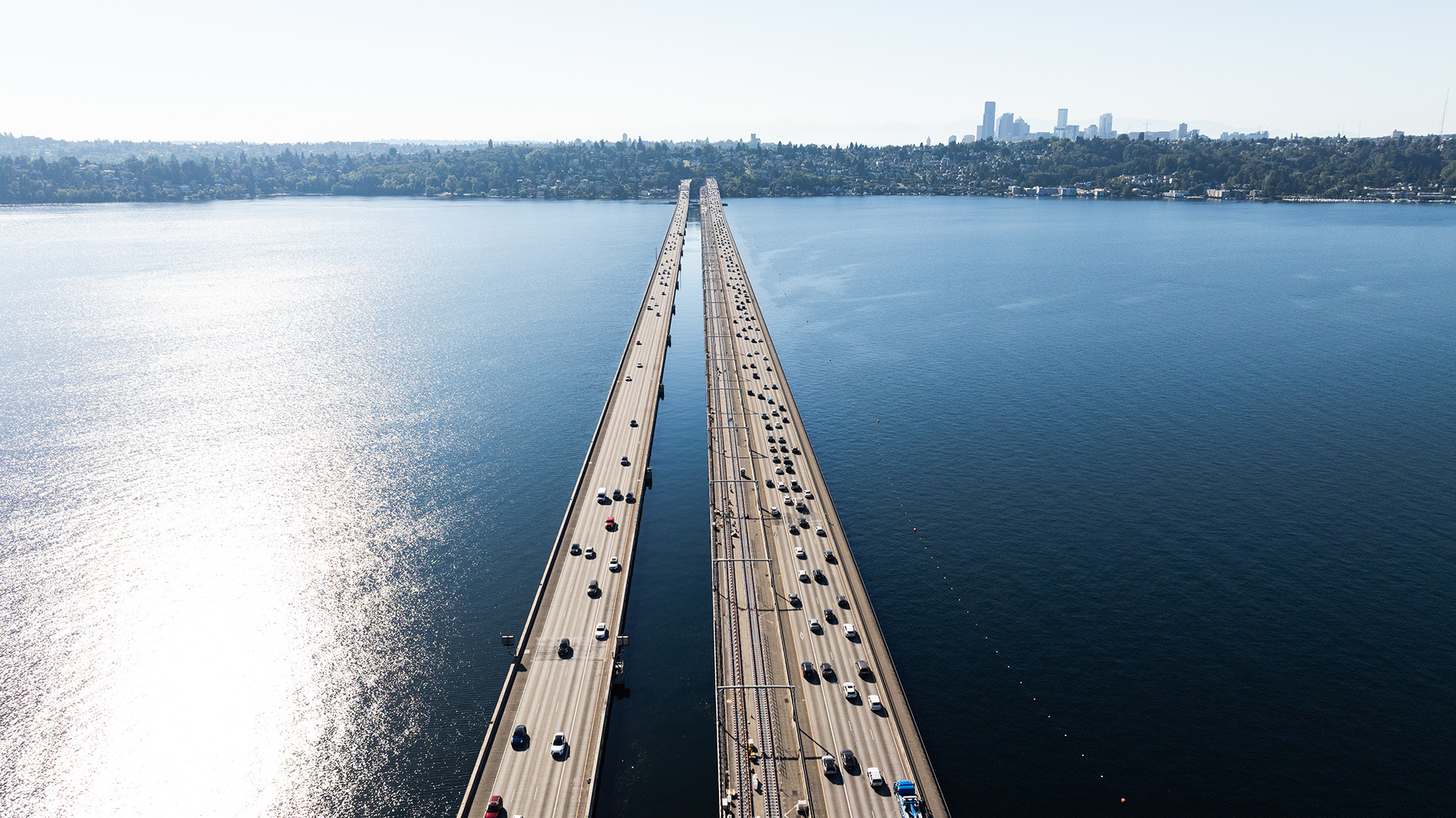
The need for monitoring is rooted in the engineering challenges behind the light rail crossing itself. Lake Washington is too deep, and the soil beneath the lake bed too poor, for a conventional bridge, which is why Washington state turned to floating bridges and is now home to most of the world's longest ones. But there were several challenges engineers had to contend with in running light rail across a floating structure.
Among them: how to deal with the transition between the floating portion and the fixed section on land. For cars, the joint between those two sections is no big deal. Drivers just hear a clunk as they roll over it. For rails, which need to be continuously supported, it's a much harder problem. A rail forced over a sharp angle leads to all the stress being concentrated at one point.
"It's like bending a paperclip over and over," Thonstad says. "Eventually, the paperclip wears out."
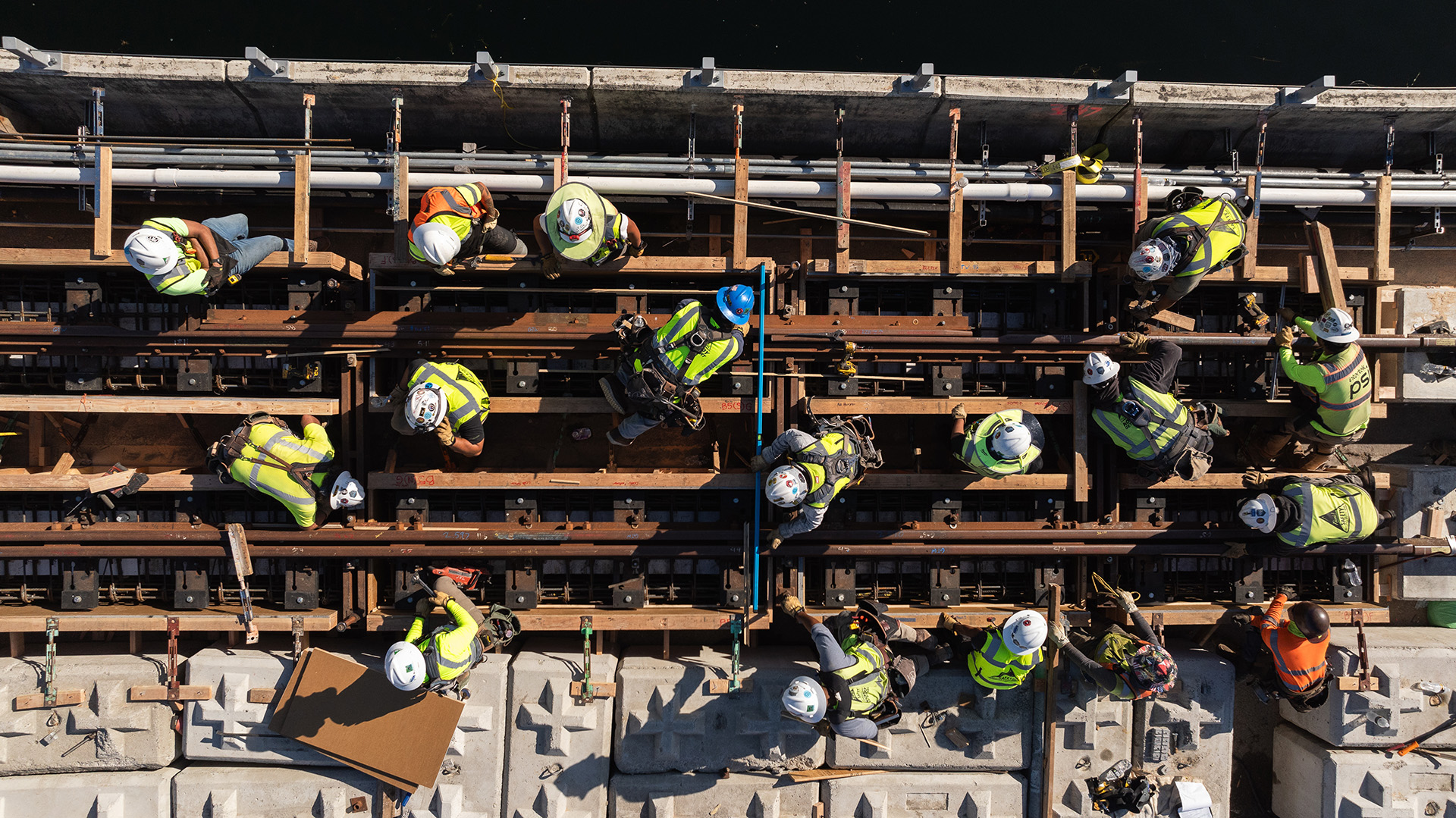
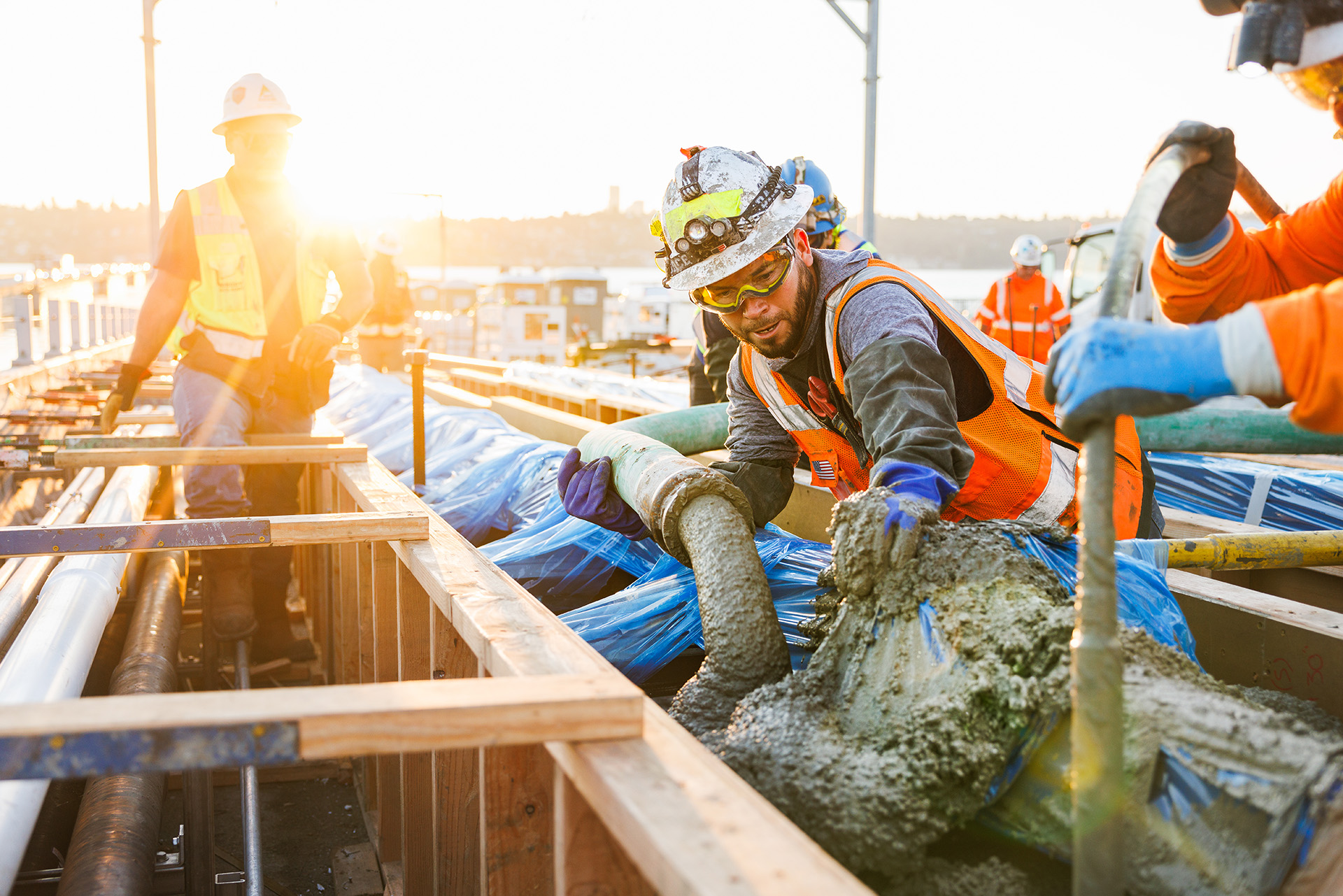
British engineer Andy Foan proposed an elegantly simple system that became the Curved Element Supported Rail System (CESuRa), now installed on the bridge. Rather than forcing the rail over a sharp kink, CESuRa spreads the bend across a longer stretch, keeping the rails fully supported.
CEE Professor John Stanton led years of lab testing to validate the design. For Thonstad, the system is personal. It was the subject of his master's thesis years ago in CEE.
Learning how the bridge breathes
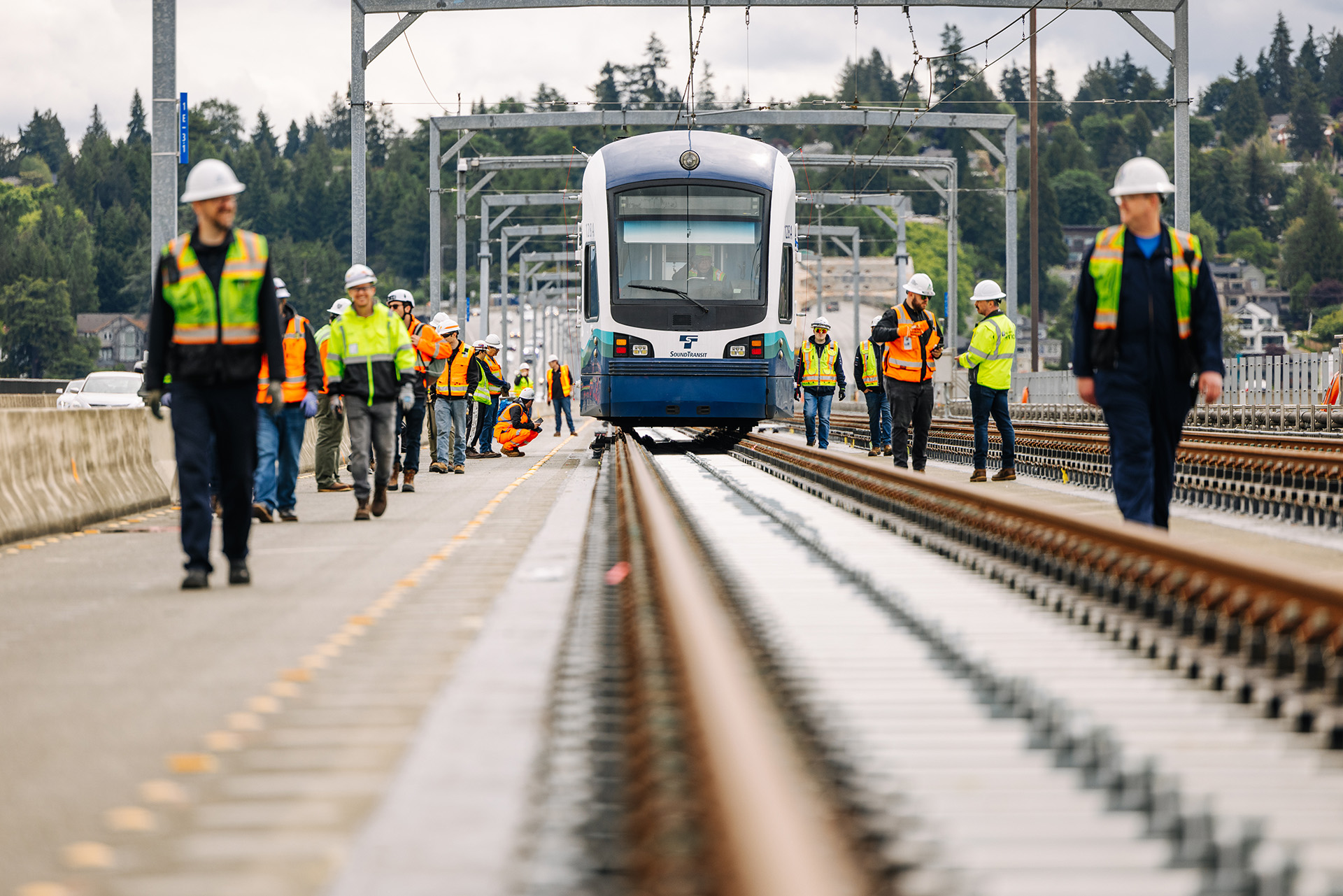
In 2022, Treece approached Thonstad about collaborating with industry and government partners who were interested in exploring how digital twins could be useful for critical infrastructure. They needed to pick a bridge, and the Homer Hadley came to mind immediately. Lake levels rise and fall 2 feet annually, requiring anchor cable adjustments. Storms raise questions about whether to close the bridge. And light rail was about to introduce forces the 35-year-old structure had never experienced.
Since deploying sensors in May 2025, the data has revealed surprises. One pontoon shows a daily vertical fluctuation tied to thermal expansion; the other, anchored by 12 cables instead of 4, barely moves. The team can track how the structure responds to trains, anchor cable adjustments and weather patterns, down to millimeters of accuracy.
"The most surprising thing for me has been learning how the bridge behaves on a day-to-day basis at the level of precision that we were never able to before," Thonstad says.
That baseline understanding is the foundation for what comes next: anomaly detection and physics-based models that can forecast the bridge's future condition. Think of it as a weather forecast for infrastructure.
A second phase beginning this summer will fold in Sound Transit's rail sensors and additional monitoring systems.
The Homer Hadley needs to last decades more. "We have to maintain the structure well, we have to make good decisions," Thonstad says. The digital twin is one more set of eyes helping make sure they do.