
June 1, 2026
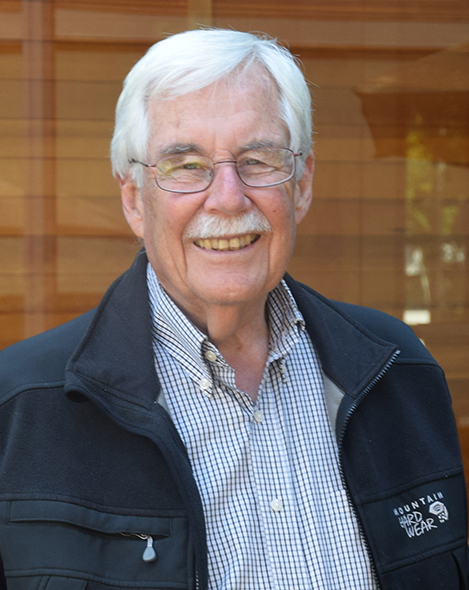
Former CEE Chair and Professor Neil Hawkins passed away on February 25, 2026. He will be remembered not only as an outstanding engineer but also as a mentor, an opener of doors and a bottomless source of advice and encouragement.
Hawkins was born in Australia in 1935, graduating from the University of Sydney with degrees in mathematics, physics and engineering. He earned his master's and doctoral degrees in civil engineering at the University of Illinois under Professor Mete Sozen, and joined the UW in 1968. He served as chair of the department from 1978 to 1987 and as associate dean of the College of Engineering until 1991, before accepting the position of department head at the University of Illinois. He returned to Washington in 2002 and remained an affiliate professor at the UW until nearly the end of his life.
Hawkins' influence on CEE was enormous. In his first decade at the UW, he helped transform the department from a largely teaching establishment into a vibrant top-tier research institution. His research spanned many areas of concrete engineering, particularly seismic applications, and its global reach can be measured by the many references to his work in documents such as the American Concrete Institute (ACI) building code. Together with the late CEE Professor Alan Mattock, he made the UW a recognized center of concrete engineering, conducting pioneering work in slab-column connections, fracture mechanics, shear-friction and the first tests of unbonded post-tensioning for seismic applications.
Hawkins also brought attention to the department through his work with industry, including his analysis of the sinking of the I-90 floating bridge, the seismic evaluation of the Olympic Hotel in Seattle and his contribution to the evaluation of the collapse of the World Trade Center.
As his career progressed, Hawkins became deeply involved in the development of building codes, where his skill as a builder of bridges, both physical and metaphorical, was on full display. Colleagues on those code committees have written of his willingness to go the extra mile to resolve disagreements and bring a topic to a successful conclusion. His contributions are reflected in key documents from ACI, the American Society of Civil Engineers (ASCE) and the Building Seismic Safety Commission. His work was recognized with numerous honors, including Distinguished Member of ASCE, Honorary Member of ACI, Titan of the Precast/Prestressed Concrete Institute and Legend of the Post-Tensioning Institute, along with more than a dozen medals and awards from leading engineering societies.
Reflecting on Hawkins' passing, longtime committee colleague S.K. Ghosh wrote, "This is a loss of a magnitude that is impossible to overstate...This is truly the passing of one of the last of the stalwarts."
Within the department, Hawkins was a popular teacher who strove to give students the best and most current information. He counseled students on their careers and went out of his way to help them find jobs, serving as a mentor to students, including the many who came from abroad to work with him, as well as younger faculty. He saw no dividing line between work and play, and many of those he worked with found themselves invited, sometimes on very short notice, to the Hawkins family home in Bellevue or their beach house on Orcas Island.
To honor CEE undergraduates more prominently, Hawkins and his wife, Ann, established the Neil and Ann Hawkins Prize in 1993. The award, given to graduating seniors in recognition of their academic and leadership excellence, is a lasting reflection of his passion for helping students just starting out.
Hawkins is survived by his wife, Ann, of 63 years; his children, Susan and David; and his four grandchildren. He will be remembered by all who knew him for his many technical achievements and for his friendship, mentorship and passion for helping others.
Neil Hawkins' full obituary is available in The Seattle Times.